

MIL Tests
Toptester is an accredited test house for many MIL-Std 810 tests*. Special MIL-Std tests also available i.e Wind-Driven-Rain. Board level component tests MIL-Std 883.
*Toptester is a testing laboratory accredited by FINAS Accreditation Service, accreditation number T275, in accordance with the accreditation standard SFS-EN ISO/IEC 17025.
MIL Tests – MIL-STD-810H Environmental and Reliability Tests
When your product has to withstand extreme conditions – shock, vibration, heat and humidity – you need a reliable way to verify its performance. MIL Tests (MIL-STD-810) is one of the most well-known and demanding environmental testing standards, ensuring the functionality and durability of products even in the most demanding conditions.
The latest version of the standard is currently MIL-STD-810H.
With Toptester’s accredited MIL testing, you ensure that your product meets even the most stringent requirements. By outsourcing the testing to us, you get impartial and internationally accepted results quickly, typically within a few weeks, without your own equipment investments.
Who and why is MIL-STD-810H testing intended for?
Although MIL-STD-810 was originally developed for military use by the U.S. Department of Defense, its requirements are now widely used in commercial product development. Testing is critical for anyone who wants to prove their product’s exceptional durability. It allows manufacturers to ensure that their products can withstand real-world conditions – temperature fluctuations, humidity, dust, vibration, and shock.
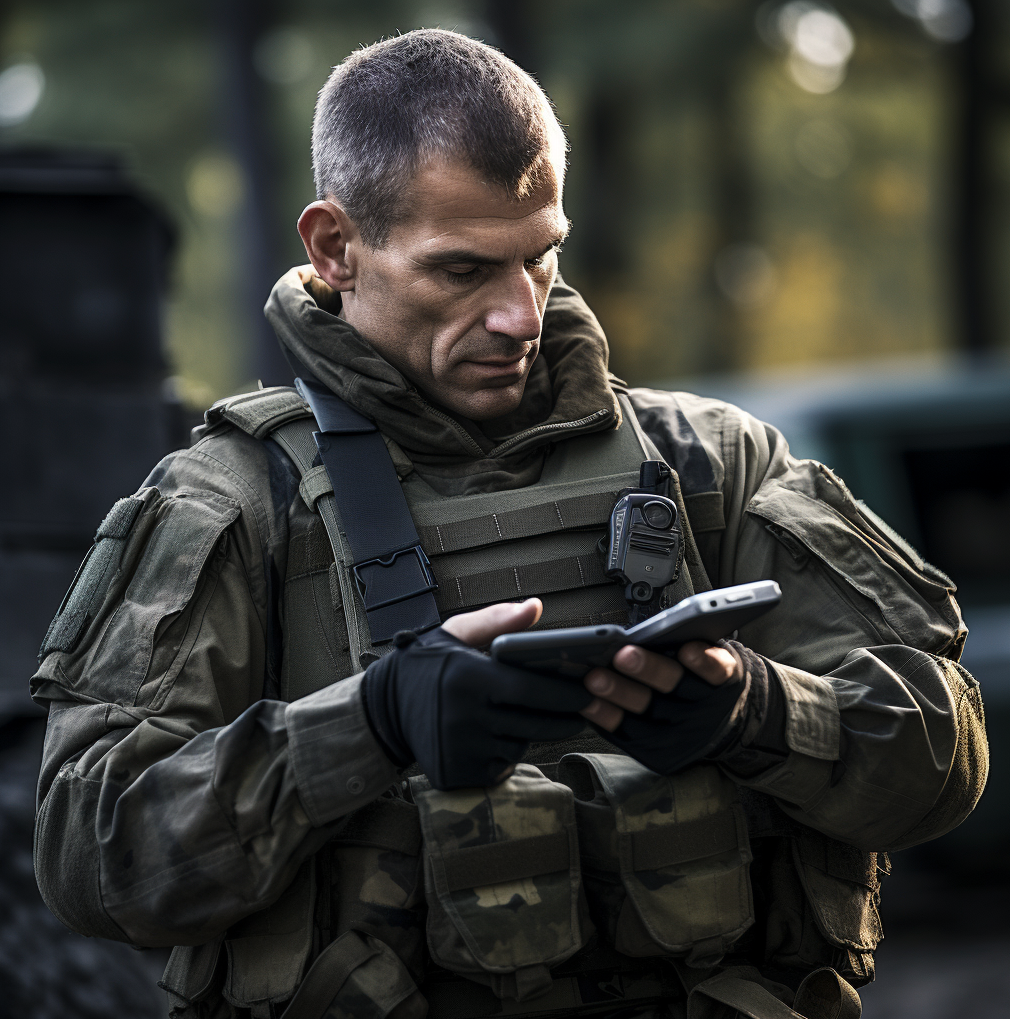
1. Defense and Aerospace
The original purpose of the standard was to ensure the performance and operational safety of defense and aerospace equipment in the field. The testing simulates the real-world environments that the equipment will be exposed to during its life cycle. For many industry players, testing to the MIL standard is an absolute requirement to demonstrate that a product meets stringent regulatory requirements.
2. Industrial Equipment and Professional Electronics
Industrial environments, construction sites, and logistics equipment are constantly exposed to shock, vibration, and dust. MIL testing ensures that measuring instruments, control units and handheld terminals, for example, operate reliably even in challenging conditions, which reduces costly production downtime and maintenance costs.
3. Consumer electronics
The standard has successfully migrated to commercial products, where it serves as a seal of reliability and durability. For example, in rugged smartphones, sports watches and laptops, MIL-STD-810H compliance is a strong selling point. It distinguishes the product from competitors and communicates top-notch quality and longevity to the consumer.
Benefits of MIL testing for your business
Testing according to the MIL standard is not an expense, but an investment in the quality and marketability of the product. It allows you to:
- Identify design errors early: Identify structural weaknesses and material selection issues already during the product development phase.
- Reduce warranty and life cycle costs: By ensuring durability, you minimize costly field failures and complaints.
- Strengthen your market position: Use an official test certificate as proof of your product’s superior quality and durability.
- Accelerate time to market: Meet the requirements of demanding customers and authorities smoothly.
What tests are included in the MIL-STD-810H standard?
MIL-STD-810H is a broad and demanding environmental testing standard that covers several different test methods to ensure the mechanical and functional durability of products. The standard includes dozens of detailed test methods to assess the durability of products.
Toptester’s experts will help you select the most relevant tests for your product, which we carry out in our accredited laboratory. The most common tests are:
- High Temperature: Functionality and storage in hot conditions.
- Low Temperature: Operation and storage in freezing temperatures.
- Temperature Shock: Resistance to rapid temperature changes.
- Vibration: Resistance to vibration during transport and use.
- Mechanical Shock: Resistance to drops and impacts.
- Humidity: Operation in high humidity.
- Sand and Dust: Protection against the ingress of small particles.
- Rain: Protection against rain and splashes.
Together, these and other test methods give a comprehensive picture of the product’s durability in real-world usage conditions.
MIL-standard testing services, fully accredited.
Agile, high-quality testing for defence industry products.

MIL-STD-810H -tests
From 1 090 €
We provide comprehensive environmental and climatic testing covered by MIL-STD-810H.
What gets tested?
The reliability of a product’s performance under conditions defined by the U.S. Department of Defense.
Benefits?
Ensuring reliable product performance in demanding and rapidly changing defense environments.

Icing / Freezing Rain
From 3 550 €
The Icing Rain test simulates combined freezing and precipitation conditions to evaluate a product’s performance and operational reliability in icy environments. These tests are carried out in our environmental test chamber.
Method 521, Icing/ Freezing rain
What gets tested?
A product’s functionality and ability to recover when subjected to the mechanical stresses and obstructions caused by ice buildup. Typical evaluations include, for example, the de-icing of optical device lenses and the ability of hatches or covers to open from beneath an ice layer.
Benefits?
Helps identify how the product’s structural, electrical, and mechanical functions perform beneath an ice layer.

Wind-Driven Rain
From 3 650 €
The Wind-Driven Rain test evaluates how wind and rain together affect a device’s watertightness and sealing performance under storm-like conditions. The method is based on the MIL-STD-810H standard and is suitable for both product development and quality assurance needs.
Method 506, Rain & blowing rain
What gets tested?
Watertightness, sealing integrity, and performance during wind-driven, storm-level rainfall.
Benefits?
Meeting customer requirements and ensuring reliable product performance in harsh storm conditions.

Solar radiation testing
From 6 500 €
The Solar test simulates the long-term effects of sunlight and temperature fluctuations under accelerated aging conditions. The test evaluates how outdoor devices containing electronics maintain their performance and material durability when exposed to solar radiation.
Method 505, Solar Radiation, procedure II, 10 or 56 days
What gets tested?
Material durability against UV radiation and heat.
Benefits?
Meets customer specifications and ensures that surface materials are resistant to UV exposure.
Watch the video below to see the MIL tests of a Suunto sports watch tested by Toptester.
Why choose Toptester’s accredited MIL testing?
Toptester is an accredited testing laboratory, which guarantees that our tests are impartial, reliable and internationally accepted. By choosing an accredited partner, you ensure that your test report is acceptable to authorities, certification bodies and even the most demanding customers.
Reliable test data provides a solid foundation for product development and helps you make better decisions. Contact our experts and ensure the durability of your product!
Do you need other reliability or environmental tests?
We are also happy to help with other reliability and environmental tests to support your product development.
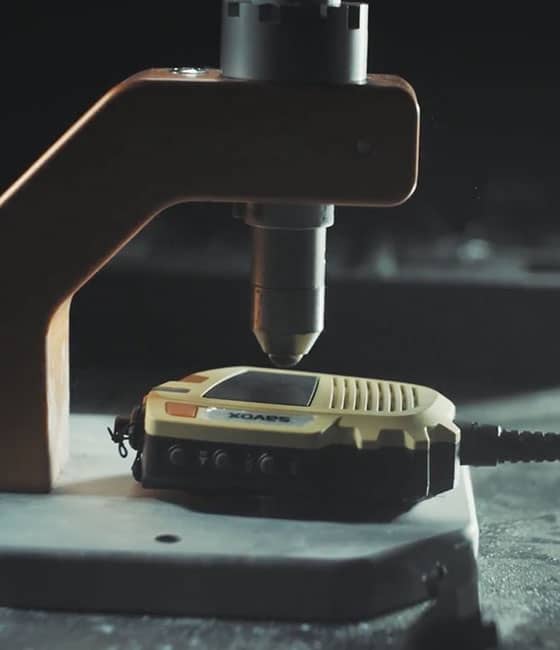
Standards at Toptester: MIL-STD-810H
Accredited tests (17025, Finas) in our laboratory:
MIL-STD-810, Method 500, Low-Pressure
MIL-STD-810, Method 501, High
Temperature
MIL-STD 810, Method 502, Low
Temperature
MIL-STD 810, Method 503, Temperature
Shock
MIL-STD 810, Method 506, Rain
MIL-STD 810, Method 507, Humidity
MIL-STD 810, Method 509, Salt Fog
MIL-STD 810, Method 512, Immersion
MIL-STD 810, Method 514, Vibration
MIL-STD 810, Method 516, Shock
MIL-STD 810, Method 524, Freeze/Thaw
MIL-tests in our laboratory:
MIL-STD 810, Method 504,
Contamination by fluids
MIL-STD 810, Method 518, Acidic
atmosphere
MIL-STD 810, Method 521, Icing Rain
MIL-STD 810, Method 522, Ballistic
shock (drop table)
MIL-STD-810, Method 505, Solar
Radiation, Procedure II
Accredited (17025) tests performed by our testing partner:
MIL-STD-810, Method 510, Sand & Dust
MIL-STD-810, Method 511, Explosive
Atmosphere
MIL-STD 810, Method 513, Acceleration
MIL tests performed by our external testing partner:
MIL-STD-810, Method 505, Solar
Radiation ja UV-testaus
MIL-STD-810, Method 508, Fungus
Planning a testing project?
To prepare a quotation, we’ll need your product’s dimensions, weight, and the required MIL tests.
FAQ – Frequently Asked Questions about MIL Testing
What does MIL-STD-810H mean?
MIL-STD-810H is a testing standard published by the US Department of Defense that defines methods for testing products in extreme conditions. It is the latest version of the standard and contains up-to-date testing requirements.
How long does MIL testing take?
The duration of the test depends on the product being tested and the selected test methods. Test results are usually completed within a few weeks.
How does MIL-STD-810H differ from the MIL-STD-810G standard?
MIL-STD-810H is the latest version of the standard and contains several refinements compared to previous publications, such as versions 810G and 810F. The main differences relate to updates to test methods, documentation requirements, and better consideration of modern materials and electronics.
Key improvements include:
- More detailed test protocols – Test methods have been refined to make results more repeatable and comparable.
- Better consideration of usage profiles – 810H places more emphasis on real-world environments and scenarios, allowing testing to better reflect field conditions.
- Updated test design guidelines – The standard provides more detailed guidance on tailoring a test program to a product rather than using a single generic test model for all products.
- Consideration of modern electronics and materials – Newer components, coatings, and structures have been better considered in the testing requirements.
- Clearer documentation structure – Reporting requirements have been harmonized, making it easier to utilize results in product development and certification.
Is MIL testing mandatory?
MIL testing is not mandatory, but it is often a requirement of customers or authorities, especially for defense and industrial products. It also brings significant added value to commercial products.
Can MIL testing be used for commercial products?
Yes. The standard is also widely used in consumer products, such as smartphones, sports watches and electronics.
What are the benefits of MIL testing in product development?
The aim of the test is to determine the environmental effects and the life cycle of devices or products. It also examines the performance of materials when exposed to environmental influences during their service life. This allows us to access both design flaws and material flaws. Testing can also reveal flaws in the production process and packaging processes.
MIL tests help to:
- detect design errors early
- reduce complaints
- improve product quality
- accelerate time to market
Do you get official documentation from MIL testing?
Yes. Toptester delivers an official test report and certificate that you can use in product development, customer communications and regulatory documentation.
How does the testing process proceed with Toptester?
The process is simple:
1) You contact us and tell us about your product and goals.
2) Our experts help you determine the necessary tests.
3) You deliver the products to us.
4) We perform the tests and provide a comprehensive, accredited test report.