

IP classification test
The IP Code, International Protection Marking, sometimes referred as Ingress Protection Marking, classifies and rates the degree of protection provided against intrusion (body parts such as hands and fingers), dust, accidental contact, and water to mechanical casings and electrical enclosures.
Water and Dust Resistance Testing (IP Testing) – Ensure the Reliability and Durability of Your Product
Water and dust resistance testing ensures that a product is resistant to dust and water ingress into the enclosure or structures as designed. Toptester performs IP rating testing in accredited laboratory conditions in accordance with international standards such as IEC 60529 and IEC 60598, so that the suitability of your product for real-world environments can be reliably demonstrated.
By outsourcing IP testing to us, you get impartial and documented results without expensive equipment investments. Confirm the quality of your product, support the certification process and accelerate your time to market.
What is IP rating and water and dust resistance testing?
Water and dust resistance testing, or Ingress Protection (IP) testing, is a standardized method for measuring the level of protection provided by a device’s enclosure. The test verifies how effectively a product prevents solid foreign objects, such as dust, and water from entering the device’s internal components. IP rating testing is a key part of verifying operational reliability in both outdoor and demanding indoor environments, such as dusty industrial halls.
The testing is based on the international IEC 60529 (EN 60529) standard. The resulting IP rating is expressed as two numbers:
- The first number (0–6): Indicates the level of protection against foreign objects and contact.
- The second number (0–9): Indicates the level of protection against water.
For example, the popular IP67 rating means that the product is completely dustproof and can withstand temporary immersion in water under specified conditions.
Attached is a video of IP tests for the Bittium TM2 device.
When is IP rating testing necessary?
Water and dust tightness testing is necessary for products that are used in environments where they are exposed to moisture, splash water or dust. These include:
- outdoor electronic devices
- vehicle-mounted devices and components
- industrial measurement and control devices
- sensor and IoT solutions
- lighting and electrical devices
- consumer electronics
It is worth conducting testing during the product development phase before production begins. This way, potential sealing problems, structural weaknesses and material choices can be detected early and corrected cost-effectively.
Why is protection against water and dust critical?
Water and dust tightness testing is critically important for operational reliability, because it prevents the most common and devastating causes of device failure: damage caused by moisture and dirt.
Operational reliability means that the product functions reliably and predictably throughout its designed life cycle. Dust and water are the biggest enemies of this reliability.
Protection against moisture and water
Water and moisture can destroy electronics and mechanical components in many ways:
- Electrical faults and short circuits. Water (especially dirty water) conducts electricity. When it gets on a circuit board, it can create short circuits that overheat and destroy components instantly. This can cause permanent damage to the device or even cause a fire hazard.
- Corrosion and oxidation. Even if the device survives the initial exposure to water, the moisture trapped inside will begin a slow process of destruction. Moisture and oxygen cause corrosion of metal parts, connectors and solder joints on the circuit board. Weakened connections cause intermittent malfunctions and ultimately complete device failure.
- Condensation. Rapid changes in temperature can cause moisture to condense inside the device, even if it is not in direct contact with water. Tight and breathable enclosures (as verified by IP testing) prevent this phenomenon.
Protection against dust and solid particles
The risks posed by dust are often underestimated, but they are just as serious:
- Overheating. Dust is an excellent insulator. When it accumulates in cooling vents, fans or directly on hot components, the device can no longer cool down effectively. Overheating reduces performance, shortens the life of components and can lead to premature failure.
- Mechanical wear. Fine dust and sand act as abrasives. They can wear down moving parts such as switches, buttons and fan bearings, causing them to seize or break.
- Electrical interference. Certain types of dust (e.g. metal dust in industrial environments) can be electrically conductive and cause short circuits just like water.
IP rating testing according to standards
Water and dust tightness tests are carried out according to international standards depending on the intended use of the product. The most common standards in use are:
- IEC 60529 / EN 60529 (IP ratings)
- ISO 20653 (IP ratings for vehicles)
- customer’s own standard or test program based on the measured operating environment
Testing can be performed either according to a ready-made IP rating (e.g. IP54, IP65, IP67, IPX9K) or based on a product-specific customized test program.
How is the water and dust tightness test carried out?
At Toptester, IP rating testing is always planned for each product according to its requirements. Our range of methods covers all necessary tests, such as dust tightness tests with fine talc and a wide range of water tests. These include lighter splash water and water jet tests, more demanding immersion tests and high-pressure and hot water tests (IPX9K) intended for very challenging conditions. The entire testing process is carried out in controlled laboratory conditions and is carefully documented. The result is a clear test report that you can use in product development, certifications and customer communications.
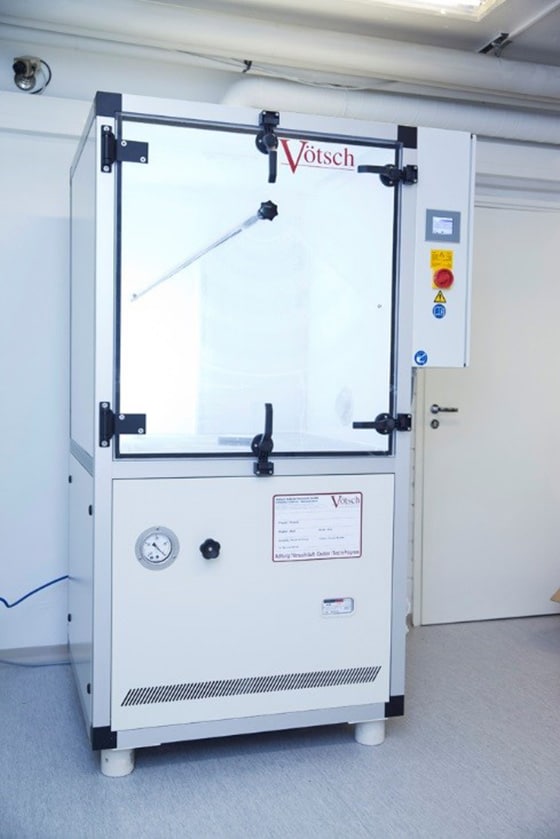
Dust testing equipment dimensions and load
Interior dimensions of the dust cabinet without extension:
Depth: 86 cm
Width: 93 cm
Height: 100 cm
Corner to corner: approx. 162 cm
Maximum load per grid level: 50 kg Maximum load with added support: 80 kg
Water: IPX6K, pressurized water
Toptester is an accredited testing laboratory, which guarantees that our tests are impartial, reliable and internationally accepted. Toptester is accredited by Finas for the following IP tests:
IEC / EN 60529
- Dust: IP5X and IP6X
- Water: IPX1, IPX2, IPX3, IPX4, IPX5, IPX6, IPX7, IPX8 and IPX9
- Foreign objects: IP1X, IP2X, IP3X, IP4X
ISO 20653 (vehicles)
- Water: IPX6K (pressurized water)
- Water: IPX9K (hot pressurized water)
- Water: NEMA 4
IP testing is an investment in product quality and marketability
Water and dust tightness testing is a critical part of product development that brings clear business benefits. By identifying weaknesses in the enclosure and seals at an early stage, expensive damage caused by moisture and dust can be avoided later. This not only improves the quality of the product and extends its service life, but also speeds up its time to market. Officially verified durability helps to meet customer and regulatory requirements smoothly. Therefore, IP testing is an effective tool as part of a broader environmental and condition testing to ensure the success of the product.
Do you also need other tests?
We are also happy to help with other reliability and environmental tests, such as:
This gives a comprehensive picture of the product’s behavior under real-world operating conditions.
FAQ – Frequently asked questions about water and dust tightness testing
What does IP rating mean?
The IP rating indicates the degree of protection of a product’s enclosure against dust and water according to the IEC 60529 standard. The first number describes dust protection (0-6) and the second number describes water protection (0-9).
How do I choose the right IP rating for my product?
The right rating depends on the product’s operating environment. Our experts will be happy to help you choose the right level (e.g. IP54, IP67, IPX9K) based on the requirements of your product.
How long does IP testing take?
The duration of the test depends on the selected IP rating and test program. Tests are usually completed within a few days or a week.
How much does IP testing cost?
The price depends on the complexity of the test, the size of the product and the number of pieces. You can get the exact price by requesting a quote from us.
Will I receive an official test report from the test?
Yes. We always provide an accredited and documented test report that you can use in product development, certifications and marketing.
What happens if the product fails the test?
If the product does not meet the requirements, our report helps to pinpoint the cause of the defect. The results serve as valuable data for product development so that the necessary improvements can be made.
Can the testing be customized?
Yes. In addition to the most common standard tests, we implement customer-specific testing programs based on, for example, measured operating conditions.